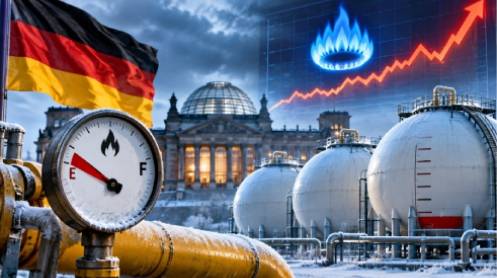
FRANKFURT: Germany must review and strengthen its gas storage policies as reserves in Europe’s largest economy remain at record-low levels ahead of the winter season, the country’s gas storage industry association INES has warned.
Thank you for reading this post, don't forget to subscribe!According to INES, gas storage facilities were 61.35 per cent full as of October 30, significantly below the government’s target of 80 per cent by November 1, raising concerns about potential supply shortages during the peak winter demand period.
Although the German government has maintained that there will be no supply bottlenecks, the industry association said the failure to meet storage targets highlighted the need for stronger measures to secure gas supplies in future winters.
“The failure to meet storage level targets shows that storage levels for coming winters must be guaranteed more rigorously,” INES Managing Director Sebastian Heinermann said in a statement.
Heinermann attributed the lower storage levels primarily to the Iran war and its impact on international energy prices, which made purchasing and storing gas during the summer months economically unattractive.
He said it was therefore important that Germany’s Federal Ministry for Economic Affairs was considering the introduction of mandatory storage obligations for gas suppliers.
He called for an early discussion of specific policy options to establish a legally binding mechanism without further delay.
INES has also prepared a report in collaboration with gas grid operator association FNB Gas to support discussions and inform the government’s policy-making process.
Meanwhile, Germany on Friday rejected accusations from Italy that it had deliberately failed to replenish its gas reserves ahead of winter to reduce costs for gas import companies preparing for privatisation.
The declining storage levels have intensified concerns over Germany’s winter energy security, particularly as geopolitical tensions and volatile international gas prices continue to affect supply decisions across European markets.
By Reuters